Off-road vehicle headlight group modification
By Carol
September 18th, 2020
570 views
Off-road vehicle headlight group modification
The fundamental reason for the headlight modification is that the brightness and range are not enough, especially the road conditions in the off-road process are very complicated, which further magnifies the shortcomings of the original headlights. The main engine factory has followed the principle of adequate use and cost control in the design of the headlights, and will not ignore the cost on a single performance, which also reserves an opportunity for the emergence of auxiliary lights. We rarely see the direct modification of the headlights in the front of the car, but more in the form of additional auxiliary lights to enhance the lighting intensity, to achieve the purpose of headlight modification, the headlight modification we mentioned below is to install auxiliary lights.
 Headlights can be roughly divided into 4 types according to different light sources, halogen, xenon, LED, and laser. The cost of the 4 light sources is also from low to high. The lighting effect of halogen is also the worst. At present, the mass-produced models of factory , Most of them use xenon or LED light sources, and halogen headlights are gradually becoming marginalized.
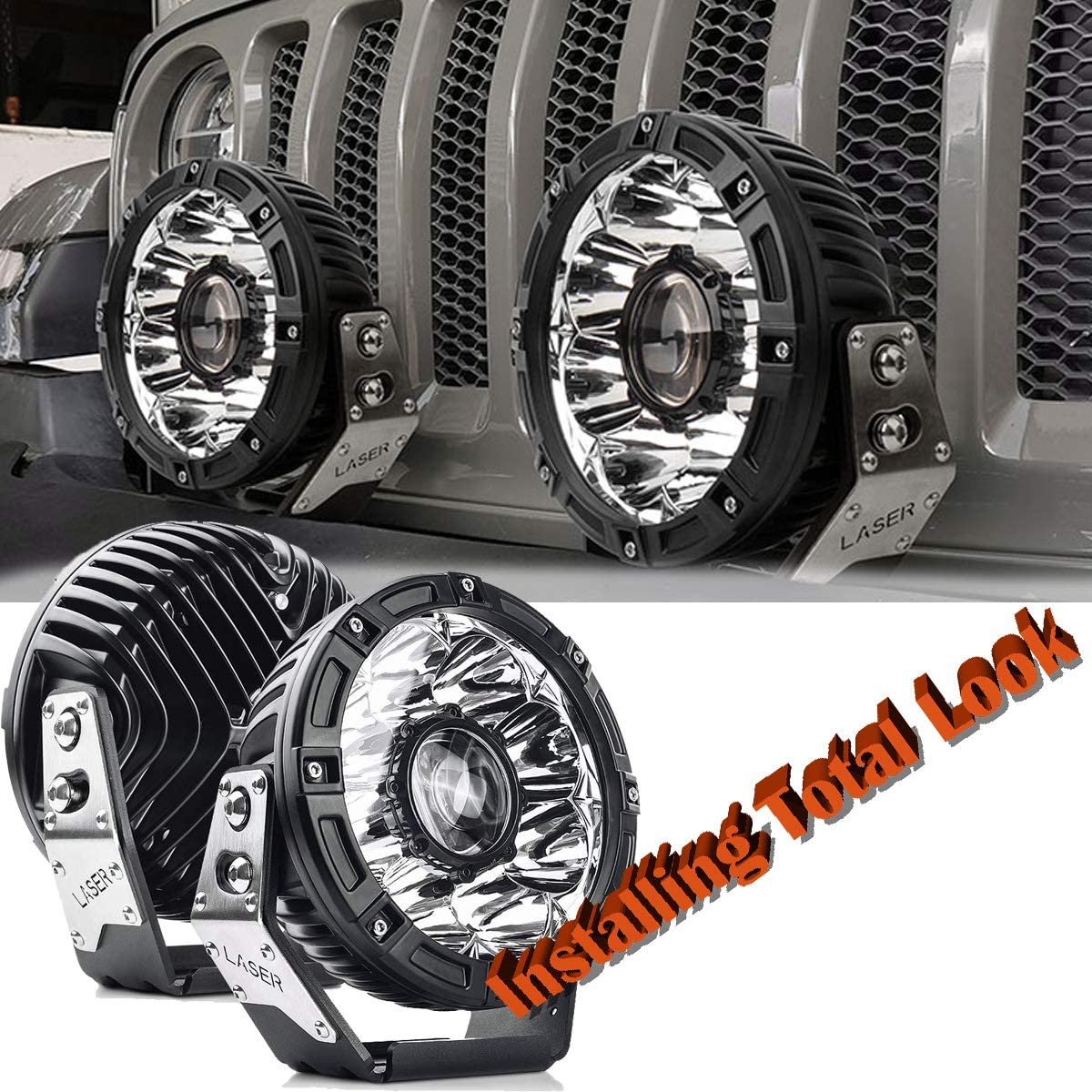 The installation of auxiliary lights also involves the concept of color temperature, which can be simply explained as the color of light at different temperatures. If the color temperature is too low, it will appear yellow (warm). For example, halogen headlights will appear blue when the color temperature is too high. "Too high" or "too low" is not good, but it will damage the lighting effect. The most comfortable color temperature range for the human eye is between 5500K-6500K. The LED light source is within this range. It is better to refer to the color temperature close to the day lamp when installing auxiliary lights.
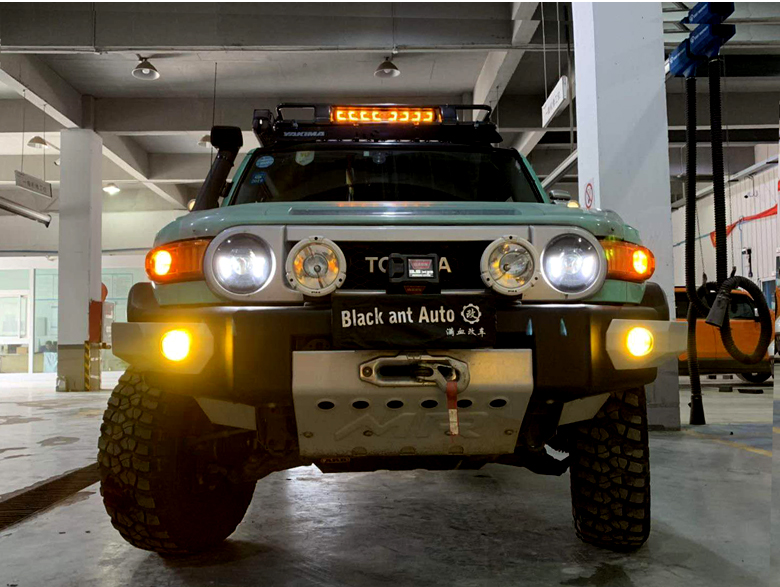 How to modify the auxiliary light? The following points need to be noted.
1. The lighting brightness of the auxiliary lamp cannot be increased indefinitely. That is to say, the power of the headlamp must take into account the endurance of the whole vehicle's electrical appliances. The brightness cannot be increased uncontrollably by increasing the power, otherwise problems are prone to occur. For example, the power of an original halogen headlight is about 60W. If you install four 100-140W halogen headlights in the front of the car, you have to comprehensively consider whether you need to replace wires, relays and other equipment.
2. It is recommended to choose the color temperature of the auxiliary lamp to stick to the recent light effect, that is, the range of 5000K-6000K is more suitable. While ensuring the lighting effect, it is not easy to fatigue after long-term driving.
3. Installation location. I personally suggest that the auxiliary lamp is installed in a state that can be disassembled at any time, tighten the screw when lighting is needed, and remove it at any time when it is not needed. The installation position can choose the bumper under the air intake grille, or install it around the roof rack, or it can be loaded with a suction cup on the hood, which can be used as it is installed, but the alignment of the auxiliary lights may be very difficult. Complicated, you still have to choose an experienced refitting factory when refitting.
4. Pay attention to legal compliance. For example, many off-road vehicle owners will fix their auxiliary lights in the gap between the air intake grille and the water tank. The wiring is easy to arrange, and the aesthetic effect is taken into account after being hidden. The modification is a non-compliant behavior. The standards for determining whether the modification is legal or not are inconsistent in different regions, and there are many subjective factors. Before modification, check the legal restrictions on headlight modification, which will help you modified car better.
Previous
Basic selection and installation requirements of lamps
Read More
Next
Buying driving lights for your 4WD
Read More


